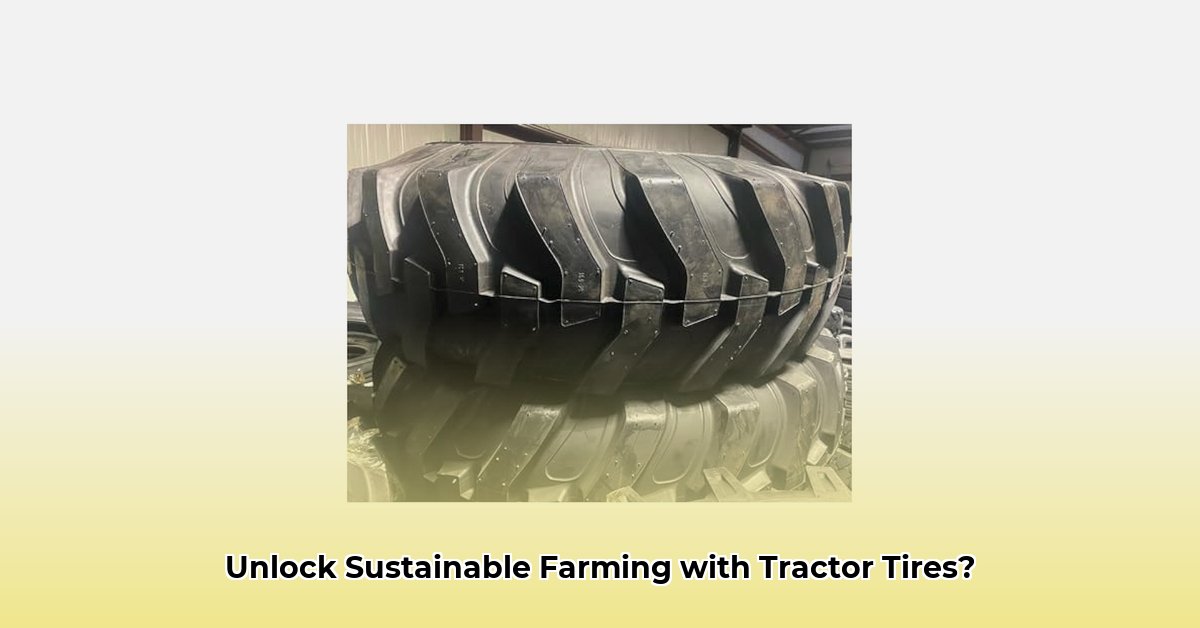
Understanding the 16.9 x 28 Tractor Tire and its Impact on Sustainable Agriculture
Choosing the right tractor tires is a critical, often overlooked, aspect of sustainable farming. Tire selection directly impacts soil health, fuel efficiency, and overall farm profitability. The 16.9 x 28 tire, a common size, offers a compelling case study in optimizing tire choice for environmental responsibility and economic success. But how does this seemingly small detail influence the larger picture of sustainable farming practices? Let's explore the key factors involved. For more information on other tire sizes, check out this helpful resource on different tractor tire options.
The Significance of Soil Compaction
One of the most significant challenges in modern agriculture is soil compaction. Heavy machinery, particularly tractors, can severely damage soil structure resulting in reduced water infiltration, hindered root growth, and ultimately lowered crop yields. This often leads to increased reliance on fertilizers and pesticides, negatively impacting both the environment and the farmer's bottom line. It's a vicious cycle that sustainable agricultural practices must actively address. How can we break this cycle? The answer, in part, lies beneath our tractors.
"Soil compaction is a silent thief, stealing yield and long-term soil health," states Dr. Emily Carter, Soil Scientist at the University of California, Davis. "Minimizing compaction is critical for sustainable agriculture." This underscores the critical role of proper tire selection and management.
The 16.9 x 28 Tire: A Closer Look
The 16.9 x 28 tire provides a larger contact area compared to smaller tires, distributing the weight of the tractor more effectively and reducing ground pressure. This translates to less soil compaction, improved water infiltration, enhanced aeration, and healthier root systems. It’s a direct pathway to improving soil health, a cornerstone of sustainable practices. The question then becomes: How best can farmers utilize this tire size to its full potential?
Optimizing 16.9 x 28 Tire Usage for Sustainable Farming
Several key strategies enhance the positive impacts of 16.9 x 28 tires on sustainable farming. These involve both proactive tire management and a broader approach to farm operations.
Regular Tire Pressure Monitoring: Maintaining optimal tire pressure is crucial for fuel efficiency and minimizing soil compaction. Under-inflation increases rolling resistance, while over-inflation concentrates the pressure on a smaller area. Regular checks (at least weekly) using an accurate gauge are essential. A Tire Pressure Monitoring System (TPMS) provides continuous monitoring across multiple tractors, significantly improving efficiency.
Tire Maintenance: Regular inspections for cuts, bulges, or excessive wear are crucial for preventing larger issues, extending tire lifespan, and maintaining optimal performance. Addressing minor damage promptly prevents costly replacements later. How can we make this a standard practice?
Consider Low-Pressure Tire Alternatives: While not always feasible, exploring low-pressure tire options, specifically designed to reduce soil compaction, can provide further improvements. These tires offer enhanced flexibility, further reducing ground pressure and boosting sustainability efforts. The initial cost increase is often offset by long-term gains in soil health and fuel savings.
Responsible Tire Disposal: End-of-life tire disposal demands responsible handling. Recycling and proper disposal methods minimize environmental impact, ensuring sustainability across the entire tire lifecycle. How many farmers actively choose eco-friendly disposal solutions?
Long-Term Strategies for Sustainable Tire Management
Sustainable agriculture demands a long-term perspective. Proper tire management is a continuous process, not a one-time fix.
Precision Agriculture Technologies: Integrating precision agriculture technologies—like GPS-guided tractors and variable-rate application—optimizes field operations. These reduce unnecessary passes and compaction incidents, ensuring efficient resource utilization. Quantifying the impact of these innovations is crucial to advocating for wider adoption.
Soil Health Monitoring: Regular soil testing provides insights into soil structure, compaction levels, and nutrient content, allowing for proactive adjustments in tire pressure and farming practices. Farmers can then adapt their methods based on real-time data.
Ongoing Research and Development: The agricultural technology landscape is constantly evolving. Stay informed about innovations in tire technology and sustainable farming practices, adapting your methods as new solutions emerge. This continuous learning enhances both farm efficiency and environmental responsibility.
Key Takeaways:
- Reduced Soil Compaction: Larger tires, proper inflation, and advanced technologies like IF/VF tires and CTIS directly minimize soil compaction.
- Improved Fuel Efficiency: Optimized tire pressure reduces rolling resistance, leading to significant fuel savings over time.
- Enhanced Soil Health: Minimizing compaction promotes better water infiltration, aeration, and root growth, ultimately improving crop yields and long-term soil fertility. This translates to a healthier ecosystem and greater farm productivity.
The 16.9 x 28 tire serves as an effective example of how seemingly small choices can contribute significantly to the larger goal of sustainable agriculture. By prioritizing proper tire management and embracing new technologies, farmers can improve their bottom line while contributing to environmental sustainability. It's a win-win scenario that directly benefits both farmers and the environment.